
Why Apple Should Buy Granola
• The Big Read: Silicon Valley looks to a new biotech frontier—Montana
• Garry Tan’s political dreams require this 32-year-old’s ‘grunt’ force
• Plus, Recommendations—our weekly pop culture picks: “Dead Rabbit,” “The Amateur” and “The Drama”
Here’s a thought that would’ve seemed startling not long ago: There’s a very good chance that someone secretly recorded you this week with the help of AI. If it didn’t happen this week, it will almost certainly happen sometime in the very near future—then continue to happen with greater and greater frequency.
And if you weren’t the one unknowingly recorded, you might have been the one pushing the record button, and you probably didn’t think twice about it. Because here’s another thought that once would have seemed extraordinary: Despite what would seem like obvious privacy invasion concerns, no one seems all too bothered by the trend—and the AI note-taking apps fueling it.
Of those apps, one of the most popular is Granola, which records a meeting, autogenerates notes from it and suggests follow-up tasks. It can be used for in-person meetings, and it also syncs seamlessly with software like Zoom and Google Meet. And really, I think it’s a pretty clear comment on the app’s caliber that anyone would rather use Granola than rely on the note-taking features Zoom and Google Meet offer. (People like it for a variety of factors, including the fact that it records digital meetings unobtrusively: No one in a Google Meet would know you’re using it—it doesn’t join the meeting as a participant or put up a recording banner.)
Granola is especially well liked especially in Silicon Valley, where the VC crowd has proselytized it. In a testament to Granola’s quality, the company accomplished a real feat a couple of days ago: It released a version of its app for the Apple Watch, and all of a sudden, people were talking online about the Apple Watch as an honest-to-goodness must-have gadget.
“We’ve had a lot of emails saying, ‘I’m gonna go out and buy a Watch because of this’ or ‘Time to pull my Watch out of the drawer,’” said Granola co-founder Sam Stephenson.
When was the last time Apple managed to release an attention-grabbing AI feature—or make the Apple Watch seem cool? Certainly not anytime in recent memory. So here’s what I think should happen: Apple should buy Granola.
Like the best Apple products, Granola is beloved by its fans—many bands would love to have such dedicated groupies—for its sleek, well-designed simplicity. And the startup has just proven it can breathe new life into an Apple product that has seemed dull for years. Apple needs people who can pull off such a task, having chosen to heavily rely on updates to a few core products in recent years. (Granted, maybe incoming CEO John Ternus will shift that mindset a bit; meanwhile, Apple is reportedly working on smart glasses, as well as a wearable AI pin.)
Perhaps most importantly, Granola can be probably acquired for the type of price Apple likes to pay: The company does not do mega-acquisitions. Granola, founded in 2023, most recently got a $1.5 billion valuation in a March fundraising, which included Index Ventures, Kleiner Perkins and other investors.
Granola’s attention-catching Apple Watch debut was something of a happy accident, Stephenson said. The app was originally a side project of Tom Humphrey, a Granola software engineer, that gained momentum within the company after he bolstered enthusiasm for it with a surprising revelation: The data Granola accessed about its iOS users showed that 40% of them also owned an Apple Watch.
Among Granola staff, the Apple Watch app has quickly become much more popular than the iPhone one. “You just think to turn it on much more often than you do with the iPhone,” Stephenson said. “The worst thing about the iPhone app is that it’s in your pocket: out of sight, out of mind. You forget to use it.”
Granola has toyed with the thought of making its own hardware but has shied away from doing so. Whatever the startup released would face stiff competition from the growing number of already available devices dedicated to AI note-taking. Plaud, a five-year-old startup, makes one of the most popular ones.
I first wrote about Granola and AI note-taking last year when it seemed like the dawn of a new always-on, always-recording world. It’s now something like sunshiny midmorning: Over the past year, Granola’s user growth has been a “smooth curve: upward and to the right,” said Stephenson. (He declined to give specifics.) Meanwhile, the startup has gone from two floors of a Shoreditch, London, office to occupying the entire building, roughly quintupling its staff to nearly 100.
Given Granola’s rising popularity, I asked Stephenson if he had met any unexpected users. “Well, Gwyneth Paltrow comes to mind,” he said.—Abram Brown ([email protected])
Weekend’s Latest Stories
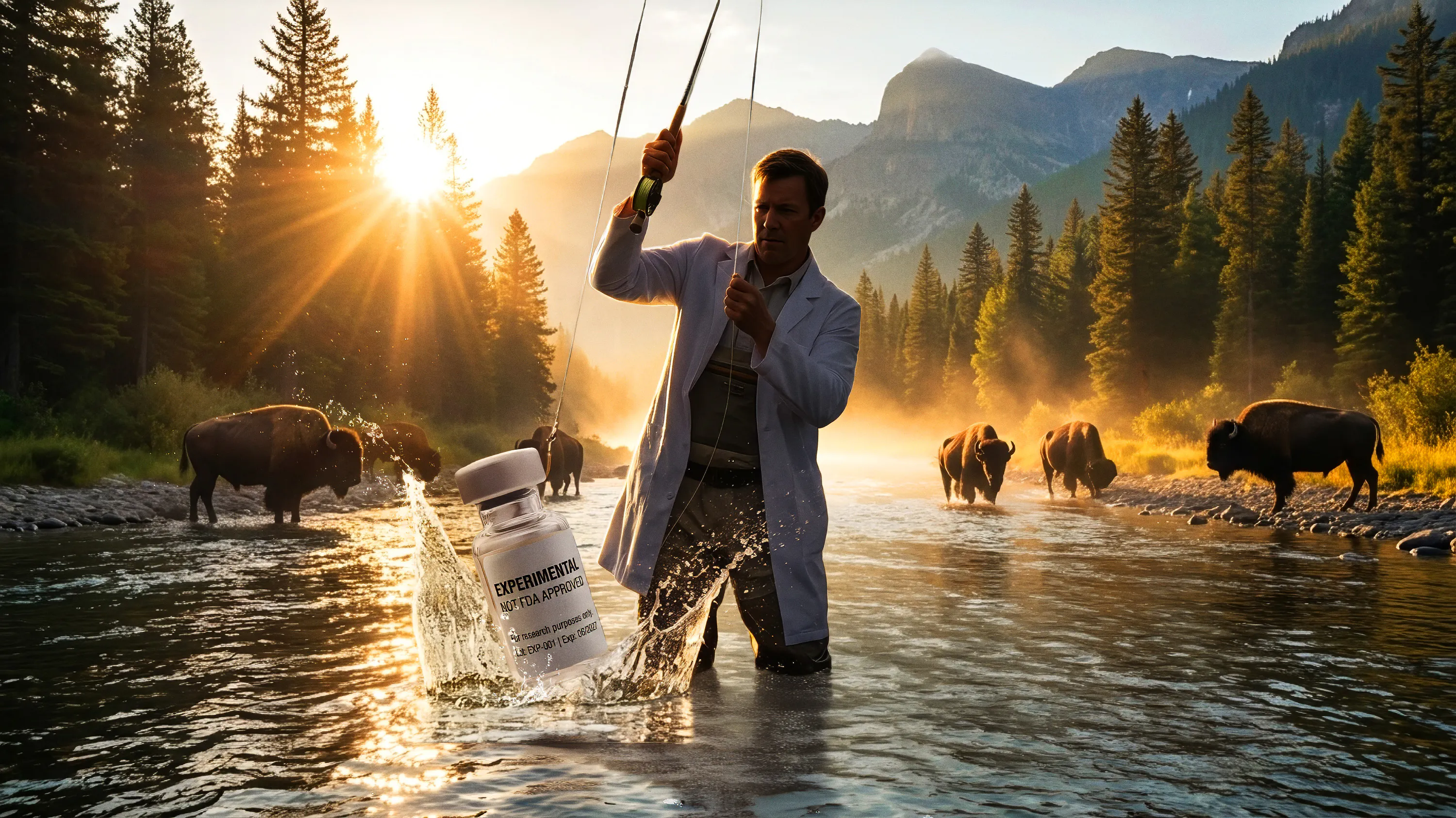
Silicon Valley Looks to a New Biotech Frontier: Montana
The state is now allowing anyone—not just the very sick—to access unapproved, experimental drugs. It’s a boon for biotech startups and an overt embrace of the tech world ethos for cutting back on rules that might limit innovation.
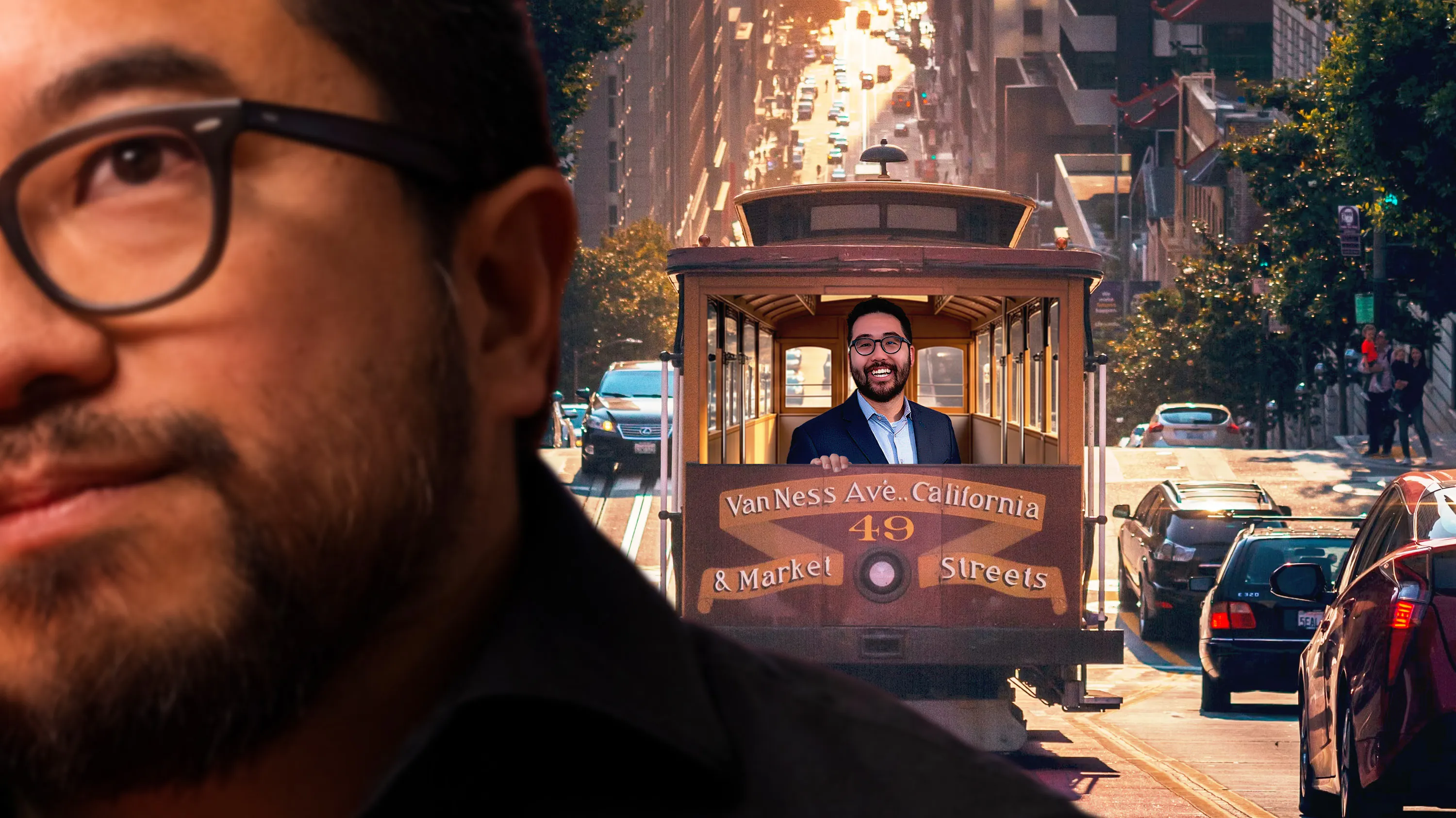
Garry Tan’s Political Dreams Require This 32-Year-Old’s ‘Grunt’ Force
Forrest Liu is tasked with an agenda that focuses on local Bay Area candidates, economic growth—and the death of the billionaire’s tax.

Listening: “Dead Rabbit”
As a genre of fiction, folk horror has given us memorable entertainment such as “Midsommar” and “The Wicker Man.” “Dead Rabbit,” a podcast from BBC Radio 4, is the rare nonfiction version: Hosts Dan Ashby and Lucy Taylor, a husband-and-wife pair of investigative journalists, set off into the countryside to figure out why piles of mangled animals keep getting threateningly piled up around Awbridge, England, a well-heeled, 757-person community. It’s a place full of well-tended flower baskets and a chipper vicar, who tries to turn the first grisly mise-en-scène he encounters on his parish doorstep—a severed deer’s head—into a joke about venison sausages. Not everyone in the clergyman’s flock is as determinedly upbeat, and the carcasses have thoroughly disturbed much of the village, sparking WhatsApp groups replete with theories (devil worship, perhaps?) and recriminations. The series begins as a spotlight on what happens within the unnerved small town and then widens its focus to larger issues of conservation, animal cruelty and liberal-versus-conservative politics. Squished roadkill has never seemed more sinister.—Abram Brown
Reading: “The Amateur” by Chris Bohjalian
After three decades and 24 novels, Chris Bohjalian has established himself as an ultrareliable source of highbrow potboilers. More often than not, he likes to get them going with a real bang. Or, as he described it in a 2018 conversation with The New York Times, he likes an opening moment of “cataclysmic disequilibrium.”
Just such a catastrophe unfolds in the first few pages of “The Amateur,” his latest and probably finest novel. On Aug. 3, 1978, Mira Wilston, a privileged teenage golf prodigy from a tony Westchester, N.Y., suburb, sends a well-struck drive straight through a practice net—and it zings right into the head of a nearby caddie: Kenny, a high school classmate. It kills him instantly. So who deserves the blame? Mira, who narrates the tale? The country club? The net’s manufacturer? Had Bohjalian been thinking less ambitiously, he would’ve kept his exploration of culpability and responsibility confined to the immediate damage from Mira’s errant shot (in a tale embellished by nice period-piece details, like the high school’s smoking lounge and the Miami Sound Machine records). But he wasn’t and he didn’t. In the accident’s aftermath, the disequilibrium intensifies—as Kenny’s demise inadvertently leads to the public revelation of a long-running sexual relationship between Mira, 18, and one of the country club dads. Yes, it should sound a little like “Lolita,” and therein lies the greater conceit of “The Amateur,” which appropriates and restyles Vladimir Nabokov’s classic, widening to an examination of power, control and fate. The connection between the two novels is an explicit one: Mira, who recounts all the events with a meta, tragicomic awareness, remarks on it several times.—A.B.
Watching: “The Drama”
An admission I make with no degree of hyperbole: I watched several parts of “The Drama,” an A24 film starring Robert Pattinson and Zendaya as a pair of engaged lovebirds, with my mouth fully agape. And when the tension between them ratcheted up further, I watched through gaps between my fingers: I’d thrown a hand over my eyes. What can I say? Scenes of matrimonial Armageddon make me squirm, and “The Drama” (newly streaming on HBO Max) goes full-on scorched earth.
To explain the plot in much detail would ruin the film, so to summarize it quickly: Shortly before their big day, a secret-telling drinking game goes horribly awry when Emma (Zendaya) reveals a dark moment from her past that shocks Charlie (Pattinson). I don’t blame him—it shocked me, too, and what’s more surprising is that the film does the reveal quite quickly. (Drew Barrymore survived only marginally longer in “Scream.”) Mostly, “The Drama” devotes itself to chronicling the subsequent fallout—with director Kristoffer Borgli twisting the usual rhythms of a screwball rom-com into devious knots.
As an unmarried 37-year-old who has needed to soldier through more than a dozen friend weddings in the last decade, I also appreciated how “The Drama” very neatly satirizes how millennials have turned the exchanging of vows into an industrial nuptial complex.—A.B.
